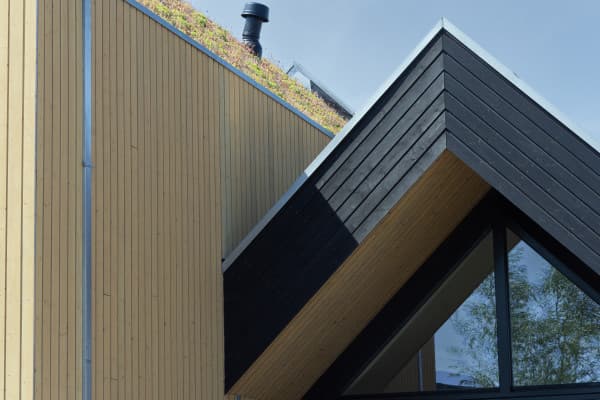
The market for facade cladding is shifting quickly. Tighter fire-safety legislation is fuelling strong demand for fire-retardant solutions. For construction firms, architects and facade specialists, this means that choosing materials and treatments is no longer just about appearance, but also about demonstrable safety.
A changing market
Where timber was long judged mainly on looks and durability, fire behaviour now takes centre stage. Clients increasingly ask for products that meet the applicable fire classes. This trend forces suppliers to anticipate early and to make sure their range is verifiably in order.
Dekker Hout has responded by carrying out certified fire tests on a wide range of wood species and treatments. The result is a well-founded overview of which combinations genuinely perform in practice.
Why practice-based testing
Laboratory values offer a first indication, but they do not always say enough about how a facade behaves in everyday building conditions. Practice-based fire tests take account of real applications, installation methods and material combinations. That makes the results far more useful for anyone designing or building a facade.
- Reliable data on fire behaviour per wood species and treatment
- Certification aligned with current requirements
- Greater certainty in material selection and tenders
For the construction sector, certified cladding is above all about managing risk. Having solid test data available in advance helps avoid surprises during permit procedures and final inspection. Demand for fire-safe facade solutions is expected to keep rising in the years ahead, partly due to further tightening of regulations. Those who invest in demonstrable quality now will stand stronger in a market where safety carries ever greater weight.